
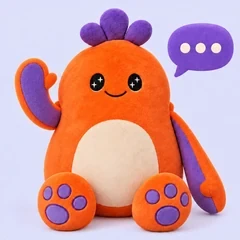
Every afternoon, a 5-year-old runs to her dadi the moment she's home from school. Before she can say a word, her dadi asks, “Did your friend give back your pink crayon today?” Dadi remembers the friend's name and yesterday's crayon fight. The little girl grins, because someone remembered.
Children light up when someone knows them. But in the evening, when children turn to their toys, it's the same play every day. Their toys don't remember a thing about them, and most don't even talk back.
Most children would love a toy that knows them too. A toy that knows their name. A toy that remembers their favourite colour is purple and that they're learning to ride a bicycle. A toy that talks back and keeps the conversation going. That's the simplest way to understand an AI toy.
So, what is an AI toy?
An AI toy is a toy your child can talk to, and it talks back in its own words. Most talking toys repeat a few recorded lines or play the same rhymes on a loop. An AI toy listens, understands, and answers something new each time.
Press, play, repeat. Or talk, listen, answer.
A recorded talking toy
- Your child presses a button
- It plays a recorded line or a rhyme
- Press again, and it plays the same thing
An AI toy
- Your child talks
- It listens and understands
- It answers in its own words, then asks something back
“AI” sounds like a big word. Most of us hear it and think of office software, chatbots and headlines about robots. But the same technology can be built in very different ways. AI made for grown-ups is built to be fast and to solve complex problems. Ask a question, get the full answer. A child needs something else. A child needs simple words, time, and room to think. So an AI toy can't be grown-up AI in a smaller box. It has to be built for a child from the very start.
It thinks with your child, not for them
A good AI toy doesn't just hand over the answer. When a child asks why it thunders, it doesn't read out a paragraph. It asks back: “What do you think makes that big sound?” The child guesses. The toy builds on the guess. By the end, the child has worked out most of the answer, and usually has three new questions.
How a good AI toy answers “why does it thunder?”
It also changes the answer as children grow. Picture two siblings asking about thunder on the same rainy evening. The 4-year-old hears that lightning is very hot, and it makes the air go boom. The 10-year-old hears that lightning heats the air so fast it bursts, and that's the thunder. They also learn to count the seconds from flash to boom, to tell how far away the storm is. Same question, two different answers, each one right for that child.
Same question. Two answers.
“Lightning is very hot, and it makes the air go boom.”
“Lightning heats the air so fast it bursts. Count the seconds from flash to boom to tell how far away the storm is.”
What about Alexa and ChatGPT?
Many parents feel this job is already done at home. There's Alexa in the living room and ChatGPT on the phone, so why would a child need anything else? It's a fair question, but they do different jobs. Ask Alexa “Why is my best friend angry with me?” It doesn't know the friend or what happened at lunch. Often it gives a general answer or says it doesn't know, because it's built mainly for quick requests, not long conversations. Ask ChatGPT on a parent's phone and a neat list of tips appears on a screen, written for grown-up readers. Neither was made to know a 6-year-old, to ask what she thinks first, or to remember that her T. rex lost the race yesterday.
The big names have noticed that children want to talk to technology too. In the US and UK, Amazon sells the Echo Dot Kids, a smart speaker with Amazon Kids parental controls, such as bedtimes and time limits. In August 2026, OpenAI launched ChatGPT for Teens, for ages 13 to 17, with safety settings on by default and a Study Mode that guides with questions instead of handing over answers. Both are real steps, and both are useful. But a smart speaker is built for quick requests like a song, a story or a fact, and ChatGPT for Teens isn't made for a 6-year-old at all. Neither is built to feel like a companion for young children before their teens: something that knows them, picks up yesterday's conversation and keeps it going.
Three kinds of AI at home, three different jobs.
| Alexaa smart speaker | ChatGPTa chatbot on a screen | A good AI toymade for children | |
|---|---|---|---|
| Made for | The whole household | Grown-ups, and teens 13 to 17 with ChatGPT for Teens | Young children |
| Best at | Quick requests: a song, a timer, a fact | Full answers and complex problems | Long, back-and-forth conversations |
| How it answers | One reply, then it waits for the next request | A full, written answer on a screen | A question back first, then help to get there |
| Made to know a young child | Not really | Not really | Yes |
Based on Amazon's and OpenAI's own descriptions of their products, October 2026.
What a good AI toy does
These are the basics to look for in AI toys for kids. Each one keeps a child's curiosity going instead of switching it off.
It knows your child.
Their name, their favourite dinosaur, the vegetable they refuse to eat, their best friend's name. The everyday things a child is proud to share.
It holds a real conversation.
Not one question and one answer, but a back-and-forth. It picks up where they left off yesterday: “Did your T. rex win the race in the end?”
It never tires of questions.
The fifteenth “but why?” gets the same patience as the first. The conversation goes wherever your child takes it.
It thinks with them.
It asks a question back and lets them guess before it explains.
It lets them interrupt.
Halfway through an answer, a child shouts “wait, wait, I know!” A good AI toy stops and listens.
It fits their age and their language.
Answers are pitched to how old they are, in Hindi, English or Hinglish, the way your child talks. Every reply is filtered before your child hears it.
One thing to try tonight
Tonight at dinner, bring up one small thing your child told you yesterday. “Did you finish your drawing of the rocket?” or “So, did your dragon beat the robot in the end?” Then watch their face. Children light up when someone remembers the little things. A good AI toy is built to give them that same feeling.
An AI toy that ticks every box
- Knows your child
- Holds a real conversation
- Never tires of questions
- Thinks with them
- Lets them interrupt
- Fits their age and language
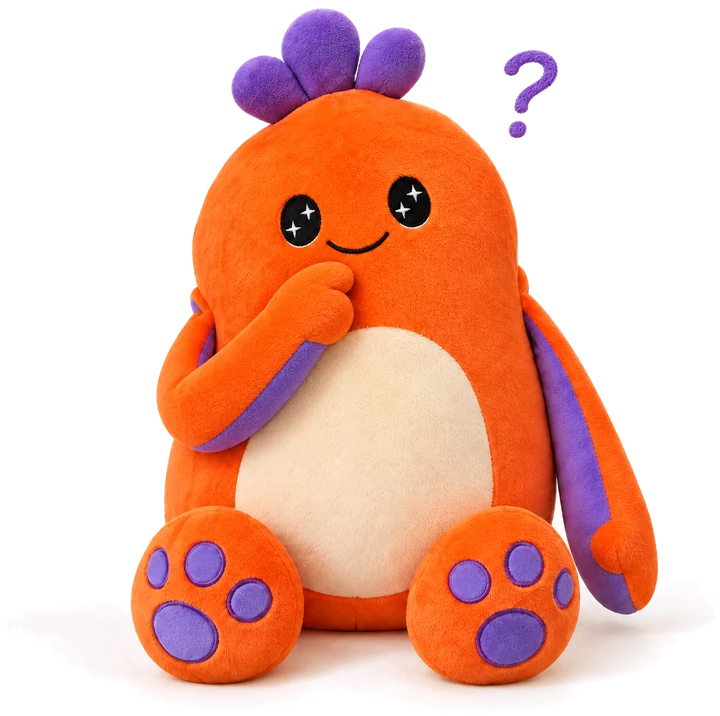
Coozie is an AI toy built for exactly this. It learns your child's name and favourite things, keeps the conversation going, and asks a question back instead of handing over the answer.
Coozie is a screen-free soft companion toy for curious children aged 3 to 12.
Join the waitlist