
7.40 in the morning. A dad is squeezing toothpaste onto a tiny brush while the school van honks outside.
Every parent knows this chain. It starts with something small and ends somewhere nobody planned, usually when you're already late.
Is this normal?
Yes, completely. For many children the whys arrive around the age of 3, and for a few years it can feel like the only word they know. It isn't a phase to get through, and it's a really good sign.
Small children are building a map of how the world works, and every why fills in a piece of it. When they get a real reason, they're happy and move on. When they get “because it does”, they simply ask again.1 So the third why usually isn't your child testing your patience. They're still waiting for the reason.
The why chain, in numbers
If it feels like a lot, that's because it is.
That's how many questions a curious 4-year-old can ask in a single day. Roughly one every two minutes they're awake.2
That's only counting about an hour a day of chatting with a grown-up, from age 2 to 5. So the real number is far bigger.3
More than half of parents get stumped.
Ever made up where the moon goes in the daytime? You're not alone. Not having the answer is nothing to worry about. What you do next is what counts, and there are easy moves for that below.
When do the whys switch on?
A why needs two things: something to wonder about, and someone to ask. When both show up at once, the whys switch on.
The why-o-meter shows how many whys you're likely to hear at different moments of your child's day. The fuller the meter, the more whys come your way.
How many whys to expect, moment by moment
A playful guess, not a study.
And a child playing alone isn't missing out. They're still wondering, just out loud to themselves.
The four kinds of why
Not every why wants the same thing. Once you can tell them apart, the chain gets a lot easier.
“Why do cats have whiskers?”
They want a real reasonGive them a real answer. The easy moves below are made for this one.
“Why do I have to wear socks?”
They want a reason, or a little say in itGive the real reason once, then a small choice: “Blue socks or red?”
“Why do we have to sleep?”at 9.15 pm
They want five more minutes with youAnswer warmly, then save it: “Great question. Let's talk about it at breakfast.”
“Why are you cooking?”while you stir the dal
They want your attentionSmile and say, “Come keep me company.” Then let them tell you about their day while you stir.
How to keep up when you're tired
You don't need to know everything. You just need a few easy moves.
The fifteenth why just landed. What do you do?there's no wrong answer
Give a small, true answer.
One sentence is enough: “Cats use their whiskers to feel their way in the dark.” A short real answer settles a why better than a long lecture.
Hand it back, or find out together.
Ask “What do you think?” Then count to five in your head before you say anything. Most children already have a theory, and some of them are wonderful. When you're stuck, “I don't know, let's find out” is one of the best things a child can hear. It shows them that grown-ups wonder too.
Keep a why jar.
Write the questions you can't answer right now on slips of paper. On Sunday, open the jar together and pick one to explore.
Let the chain end kindly.
When your answers run out, say so: “That's as far as I know. Even scientists reach a why they can't answer yet.”
And if “because I said so” slips out on a rushed morning, that's fine. Everyone says it. The next why is another chance.
One thing to try tonight
At dinner, ask your child: “What was the best why you thought of today?” Let everyone at the table guess the answer before anyone looks it up. It turns the why chain from something you get through into something the whole family looks forward to.
A companion for the fifteenth why
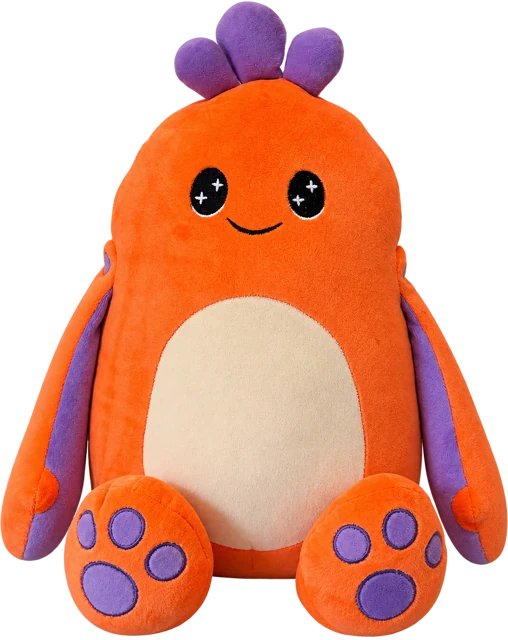
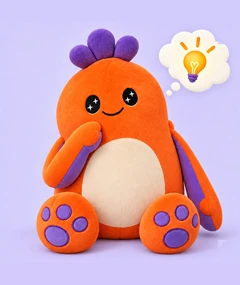
Coozie was built for the why chain. The fifteenth “but why?” gets the same patience as the first, and Coozie asks what your child thinks before it explains.
Coozie is a screen-free soft companion toy for curious children aged 3 to 12.
Join the waitlistSources
- Frazier, Gelman and Wellman, Child Development (2009), as reported by ScienceDailyBack
- Littlewoods survey of UK mothers, as reported by the Salmon Arm ObserverBack
- Paul Harris, Harvard, in Education Week (May 2012)Back
- Kantar survey of 750+ parents in six Indian cities for Amazon Alexa (June 2024)Back