
Dinner is ready. A mom props her phone against a water glass, and a cartoon starts. Every spoonful goes in while her three-year-old's eyes stay on the screen. Then the video ends. His mouth closes, and the spoon waits in the air.
“Mumma, cartoon lagao na.”
She sighs and presses play again. Honestly, she just wants him to finish his dinner.
Same child, same dinner, two ways
He isn't eating because he's hungry. He's eating because the cartoon is on.
Is it normal for kids to eat only with a phone?
What happens at home
1 square = 1 parent in 100
In one Indian study of 418 young children, almost half the parents said mealtime was the main reason they gave their child a screen. No other reason came up more often.1 So if this is your table too, you're far from alone.
What the research says
- 1
Small children eat less.
After age 1, growth slows, so appetite drops.2 Refusing food is a normal phase.3
- 2
The cartoon is part of the meal.
While watching, a child barely notices the food. It's a habit, not stubbornness.
- 3
Doctors say: no screens at meals.
The Indian Academy of Pediatrics advises no screens during meals for ages 2 to 5, and a gadget-free table for the family.4
It works, and that's exactly why so many families end up here.
Screen-free mealtime ideas for the table
Taking the phone off the table isn't only about the food. When the screen goes off, the meal turns into a time to talk, and that matters more than it sounds.
The table is for talking.
Children aged 3 to 5 hear about 7 times more new words at dinner than from a picture book.5
So here are six small ideas to bring the talking back, laid out like a thali. Pick the one that fits your home.
Six ideas, one thali
Serve yourself.
Put the food in the middle and let your child spoon one thing onto their own plate. Feeding experts put it simply: you decide what's served, when and where. Your child decides how much.6
One silly sentence.
Start a story: “Once, a potato wanted to fly.” Everyone adds one sentence between bites. Silly is the point.
Eat together.
Sit down and eat with them, even if it's one grown-up for ten minutes. Eating with a child, not just feeding them, turns it into a meal you share.
Pass the spoon.
Let dad, dadi or an older cousin take a turn. Feeding every meal alone is tiring, so share it around. A new face at the table can make an old meal feel new.
Little helper.
Give them a small job before the meal: stirring the dal, counting the rotis or setting out the spoons. Paediatricians suggest simple, supervised kitchen jobs like these for small children.7 It makes the meal a little bit theirs.
Plate faces.
Turn the plate into a face: a roti for the face, two peas for eyes, a carrot smile. Paediatricians suggest arranging food in colourful shapes children recognise.7
Build the habit early: let them feed themselves
If your child is still small, let them hold the spoon, pick up food with their fingers and get messy. Mess is part of learning to eat. Children who feed themselves get to know the taste, smell and feel of their food, and a child who's busy with their own plate has less reason to look for a screen.
Take it one meal at a time
Don't change everything overnight. Three small steps, one meal at a time.
- 1
Pick one meal.
Start with the easiest one, maybe breakfast or Sunday lunch.
- 2
Tell them first.
“Today the cartoon is resting. Let's play a game.” A heads-up beats a phone that suddenly vanishes.
- 3
Follow their lead.
Short, messy or half-eaten is fine. Don't chase the last bite. Pressure can make children dislike food.7
On a tired Tuesday, the cartoon might come back, maybe on the TV across the room instead of the phone in his hand. That's okay. One good screen-free meal is a real start.
One more thing. If you're worried about his growth or weight, check with your paediatrician.3
One thing to try tonight
Play “Guess what's in the dabba”.
For more dinner-table ideas, try the question game in The why chain or the remembering trick in What is an AI toy?
A meal doesn't need entertainment in every minute. Often the best part is the little moments of connection in between.
A companion for the minutes in between
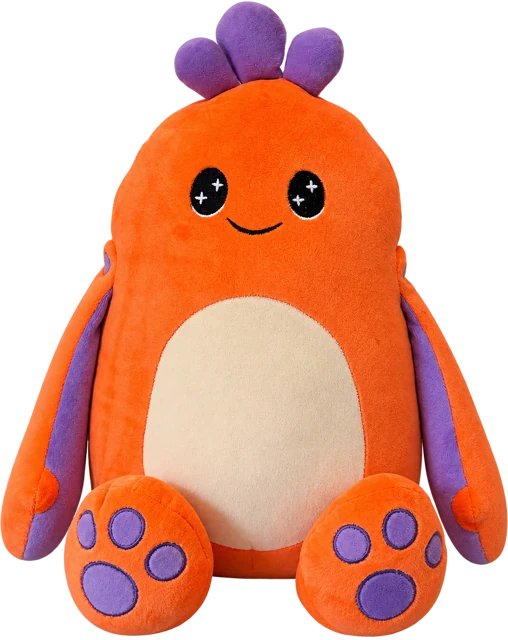
Coozie belongs in these minutes too. It can start a silly story, play a guessing game or wonder aloud where dal comes from, all by voice, with no screen to stare at. And it keeps pointing your child back to the people around them, because at the table, the best company is still the family.
Coozie is a screen-free soft companion toy for curious children aged 3 to 12.
Join the waitlistSources
- Screen time and its determinants in under-five children in a rural Indian population, Journal of Surgical Specialties and Rural Practice (2023)Back
- HealthyChildren.org, from the American Academy of Pediatrics: toddler nutritionBack
- Better Health Channel (Victoria State Government health department): Toddlers and fussy eatingBack
- Indian Academy of Pediatrics guidelines on screen time and digital wellness, Indian Pediatrics (March 2022)Back
- Snow and Beals (2006), as reported by the Harvard Graduate School of EducationBack
- Ellyn Satter Institute: the division of responsibility in feedingBack
- HealthyChildren.org, from the American Academy of Pediatrics: picky eatersBack